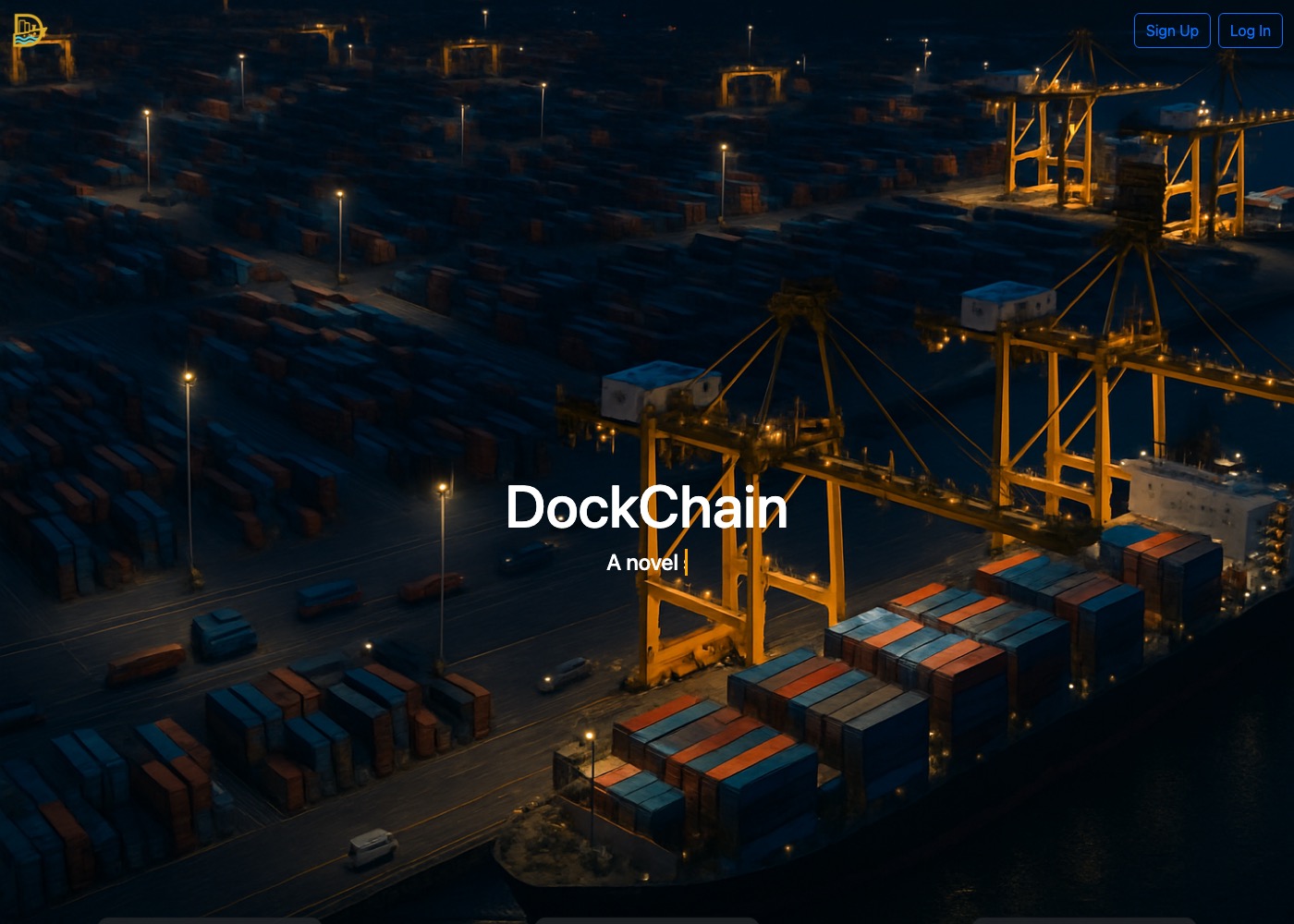
DockChain
IoT-based port security and check-in platform, built at UNC Wilmington's SIPS Lab.
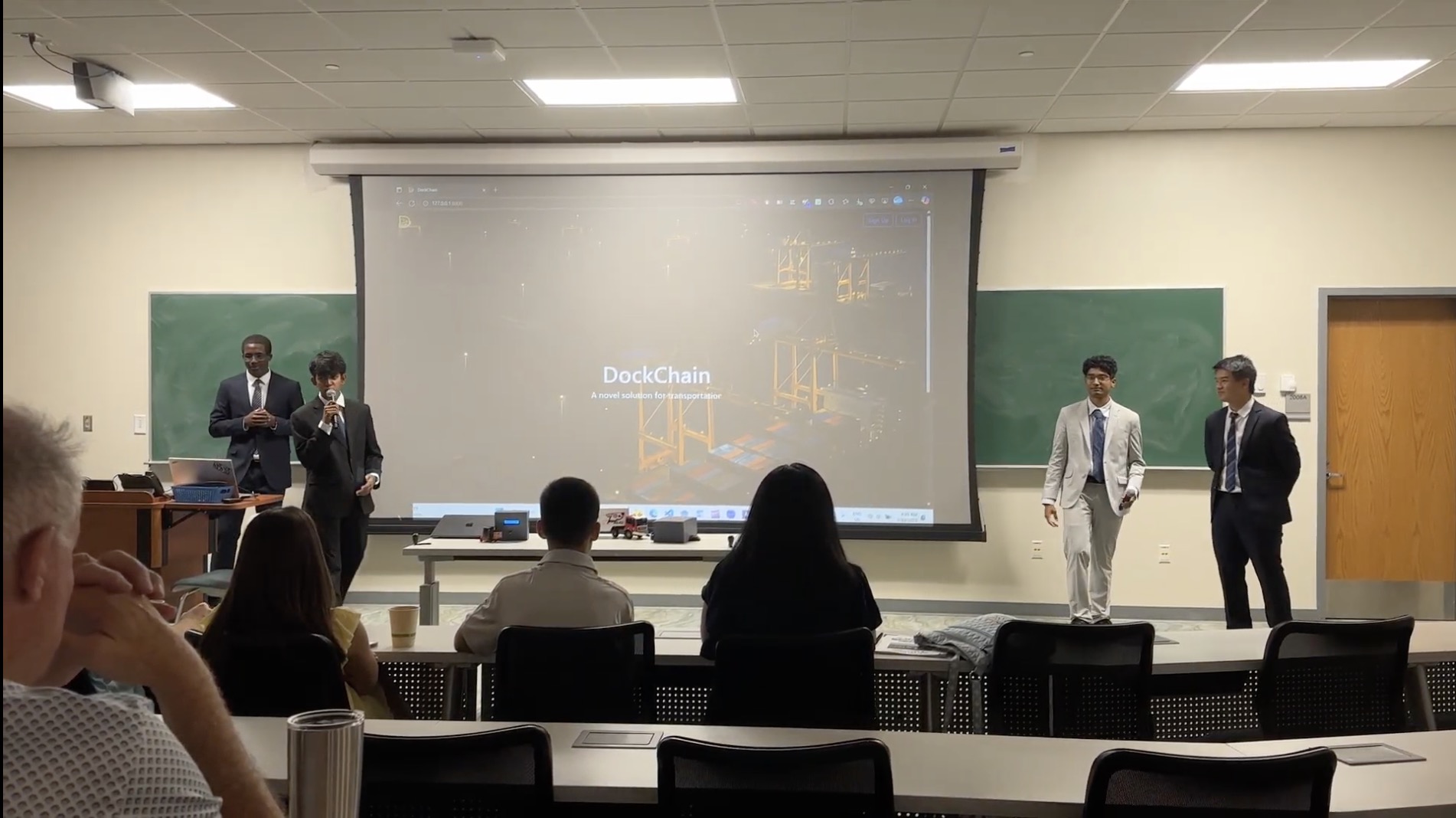
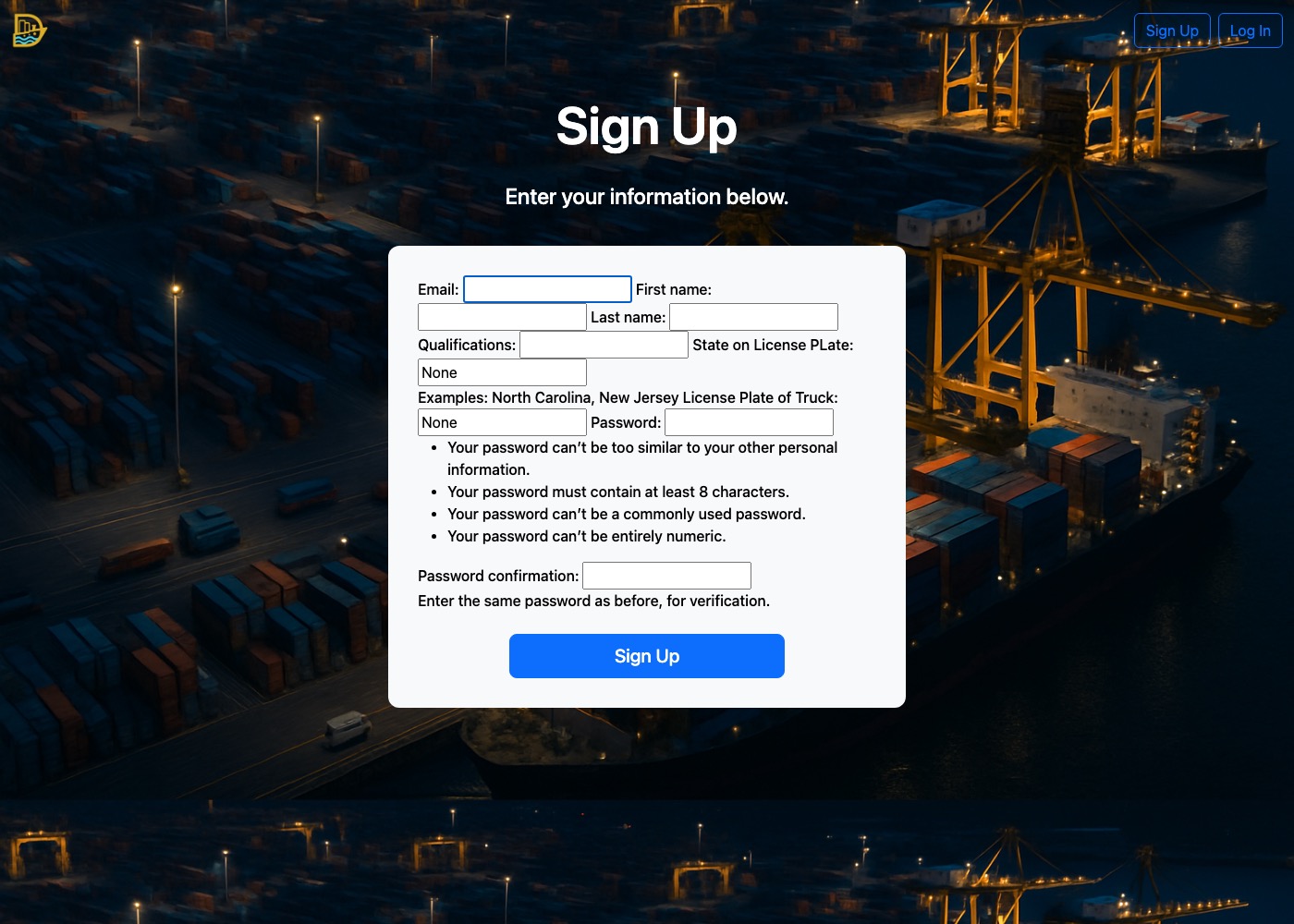
Port check-in today is manual: a driver hands over paperwork, a guard verifies it by eye, and the truck sits in line. DockChain collapses that into one automated step by combining license-plate recognition with fingerprint verification at a physical gate. The gate itself is Arduino-driven — a camera module reads the plate, a fingerprint sensor confirms the driver, and the two have to match a pre-registered truck-driver pairing in the database before the barrier opens. The web app is a three-tier Django system: a public-facing registration flow for drivers and trucking companies, a port-operator dashboard for managing registrations and viewing check-in logs, and the hardware-facing layer that talks to the Arduino gate over serial and writes check-in events back to MySQL. Built solo as primary author over a 4-week residential research program (NCSSM Summer Ventures, 1 of 38 students selected statewide) after studying the maritime shipping industry to find the actual bottleneck, with three teammates helping build out the hardware and interface. Presented at the Summer Ventures Networking Symposium; the abstract was later accepted to the Scopus/Web of Science–indexed International Conference on Cyber Warfare & Security.